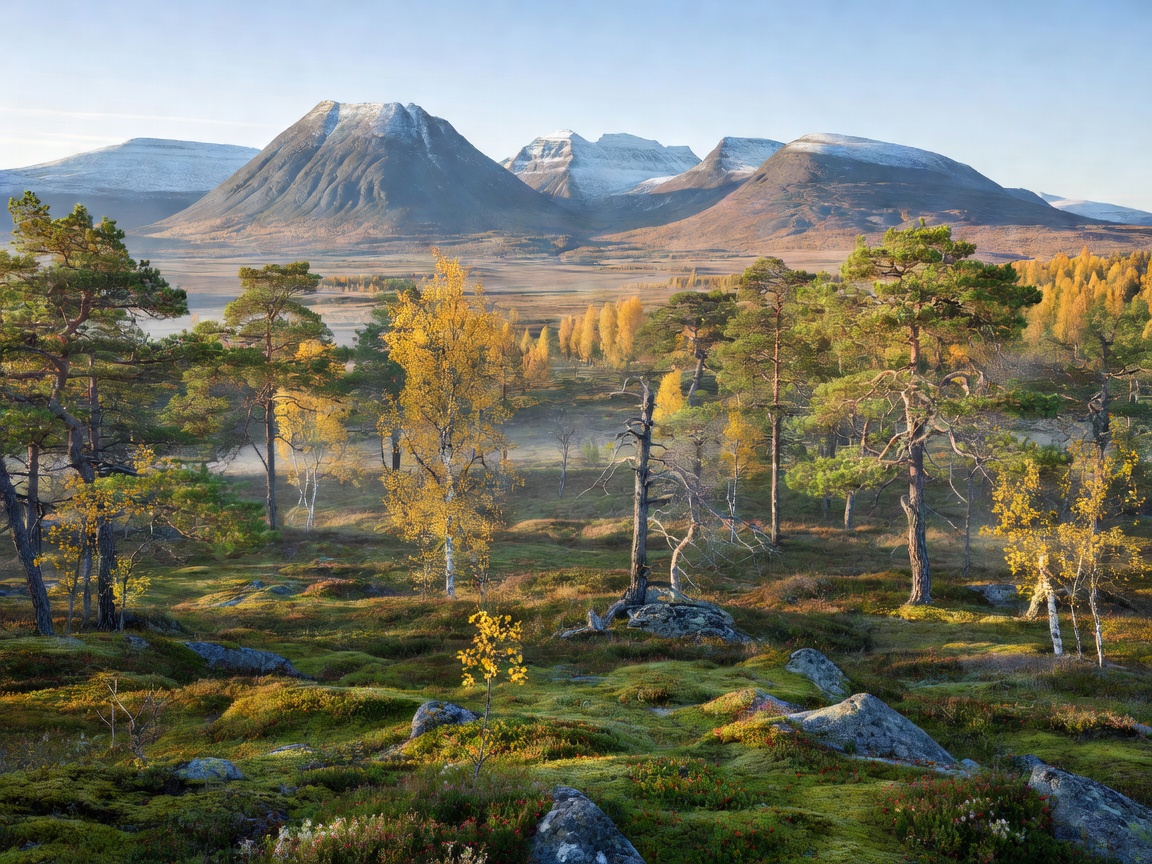
Habitat sets the context
Scandinavian wildlife occupies forest, mountain, wetland, freshwater, coastal and marine habitats. Species ranges cross administrative boundaries, while local conditions shape where animals feed, rest and move. A landscape may support wildlife without offering visible sightings. Quiet observation and appropriate distance matter more than reaching a close view.
Protected areas can include sensitive breeding, nesting or feeding grounds. Local notices may restrict access or ask visitors to avoid certain areas at particular times. Follow signs and official guidance. Never leave a path to approach an animal, nest or den. If an animal changes its behavior because of your presence, you are too close or causing disturbance.
Land mammals
Reindeer are associated with northern and mountain landscapes, and their movement and management vary by region. Keep well clear, give groups room to move and do not block their path. Avoid separating young animals from adults. Use a longer lens rather than moving closer for a photograph. Follow local guidance on herds and grazing areas.
Moose use forest and mixed habitats and may also be encountered near roads or open ground. Their size and behavior can make a close encounter hazardous. Do not approach, feed or try to move one. Give the animal an unobstructed route away. Keep dogs controlled according to local rules and maintain extra space where calves may be present.
Arctic foxes occupy northern environments, including open mountain and tundra-like landscapes. They can be difficult to see and may be sensitive around dens. Do not search for den locations or linger near suspected breeding sites. Brown bears, wolves and lynx are wide-ranging mammals with behavior influenced by season, food and human activity. Sightings are uncommon for many visitors. Keep distance, avoid attracting animals with food, and follow official local advice if signs or a sighting occur.
Birdlife and marine wildlife
Wetlands, forests, cliffs and shorelines support different bird communities. Birds of prey may travel over open ground or forest edges. Seabirds gather around coasts and islands, with nesting colonies especially sensitive to disturbance. Keep to designated routes and observe restrictions around nesting areas. Do not approach nests, chicks or resting flocks, even when adults are not immediately visible.
Marine wildlife can be seen from shore or during responsible, locally guided trips, depending on place and season. Keep boats and people at a distance set by local rules and wildlife guidance. Do not chase, surround, feed or touch marine animals. If an animal changes direction, dives repeatedly or moves away, give it more space. Use operators that state clear wildlife-respect practices where a guided trip is involved.
Seasonal behavior and observation
Wildlife activity shifts over the year. Breeding, raising young, migration, food availability and winter conditions influence movement. The same route can offer different habitat conditions across seasons. These broad patterns do not predict whether a particular animal will appear. Avoid using sensitive locations or current sightings to pursue wildlife. Local authorities and conservation organizations may advise when an area needs additional space or temporary access limits.
Move quietly without trying to stalk or corner animals. Stop at a safe distance and let wildlife choose its direction. Binoculars and a camera lens provide detail without reducing space. Avoid flash where it may disturb animals. Do not call, bait or use playback to attract wildlife. Keep groups calm and together, and teach children to watch without chasing.
Food, dogs and photography
Store food and waste securely using the arrangements required for the site. Do not leave scraps, fish remains or packaging behind. Feeding wildlife can change behavior, encourage animals to approach people and create risk for both. Keep cooking and eating areas clean. Follow local rules for camping, food storage and waste disposal.
Dog rules differ between protected areas and can vary by season. Check requirements before departure. A dog on a lead may still disturb wildlife through scent and movement; some places restrict access entirely. Respect signs and keep dogs under control. For photography, never block an animal’s route, use a drone near wildlife without confirming rules, or publish precise locations of sensitive species.
Good for
Wildlife observation suits patient visitors who value habitat as much as a sighting. Forest edges, wetlands and coastal viewpoints can be observed from established routes when local conditions permit. A binocular view from a distance is preferable to a close encounter. Plan for the landscape, not a guaranteed species encounter.
What to know
- Keep generous distance; never approach, feed, touch or corner wildlife.
- Respect seasonal closures and sensitive nesting or denning areas.
- Secure food and waste. Follow local dog and photography rules.
- Use official local advice if wildlife behavior or access is uncertain.